Too smart for your own good
11 Sep 2025On Questions and Dialogues
What makes a question smart? What makes a question dumb?
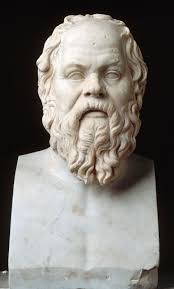
To me, a smart question is one that elicits intellectual curiosity—in me and in others—and addresses people who have a better grasp of the answer than I do. Conversely, a question is dumb if it:
Shuts down curiosity
Addresses nobody with a better grasp of the question
Few questions accomplish these negative tasks completely. As such, I find the following inquiry much more interesting:
When is a question too smart for its own good?
In my mind, there are two classes of overly “smart” questions.
The first group consists of ill-natured, performative displays of the author’s erudition. These are meant to reinforce the author’s ego as a smart and special individual, assuaging their insecurities and convincing them that they were not, in fact, stupid for needing to posit a question to another living, breathing person. Of course, no one can know for certain that this was the intent of the author. This kind of question is wanton, lecherous, and decadent. Often, the author is oblivious to the motive for their own behavior.
One such chastise-worthy specimen is here. This cow-eyed, slack-jawed specimen blabbers on, inquiring about the connection between fiber optic supercontinuum generation and the hydrogen atom, only to receive short, one-sentence answers.
The second group is a bit misinformed and confused. They may not make much sense most of the time. They type short sentences. They ask open-ended questions. They make no pretense of being experts. However, they ask a question that unknowingly hits a nerve within the community and leads to answers from within. E.g., “What exactly is RESTful programming?” Whether or not they got a satisfactory answer at their level of understanding is irrelevant, as many other people found value simply by searching the web and stumbling across the post.
Actually, I kind of agree with the sentiment behind the people asking both of these types of questions. To the credit of the self-proclaimed scholars, it is really cool and exciting to know complicated technical details and be able to engage with a group of like-minded people. And to the credit of the confused, there are many others too ashamed to speak up.
Ultimately, I’m not particularly interested in whether a question is “smart” or “dumb.” I care more about whether or not it is a good question—something that helps people.
Of course, no question is good or bad in isolation; it is the context in which it is placed that assigns value. The context is relevant precisely because when someone asks something, another must answer. At least how I see it, a good answer is one that seems to satisfy the questioner.
Some might think the converse of this statement is true: that a question is good if it satisfies the person answering. I’m not so sure.
I worry that imposing a consistent style guide on questions to make answerers happier would hamper curiosity and lead to less excitement around learning in general.
It seems that a good question/answer pair has a balance of complexity. Neither the question nor the answer outshines the other.
This brings me to my final point.
When is an answer too smart for its own good?
There are many more types of overly smart answers than there are questions. The most prolific examples are the “I’m so smart” answers. A typical exchange of this flavor might go something like this:
Q: What is that furry animal with hooves that runs around called again?
A: The answer to your question could be a donkey, zebra, horse, giraffe, cow, or any other ungulate that prances about. Of course, that would be if and only if you meant to ask what the animal was called in the English language. In Spanish, for example, the same animals would be called burro, cebra, caballo, jirafa, y vaca.
I like to conceptualize these as $O(N^2)$ answers. That is, the answer fails to address the specific inquiry and does so in $O(N^2)$ time, where $N$ was the amount of time spent posing the question. In this framework, an $O(1)$ answer to an exchange (which might answer imperfectly) might look something like:
Q: What day of the week was it 1000 days ago?
A: Wednesday.
Because of these examples, I disagree with Eric Raymond and his overarching “How To Ask Questions The Smart Way” philosophy. Good questions are made by good answers. Being explicit undercuts being concise.
I would rather KISS (Keep It Simple, Stupid) than be explicitly precise. Who cares what version of Ubuntu I’m running if the answer to my question would have been consistent for the LTS? I place a greater responsibility for whether a question is good or bad on those answering the questions than on those asking.
That being said, Raymond’s comments—”Choose your forum carefully,” “Volume is not precision,” and “Describe the goal, not the step”—are sage advice for anyone looking to get their question answered reliably on the internet. However, “Don’t rush to claim you have found a bug” and the rest become second nature if you can just learn to Keep it Simple, Stupid.